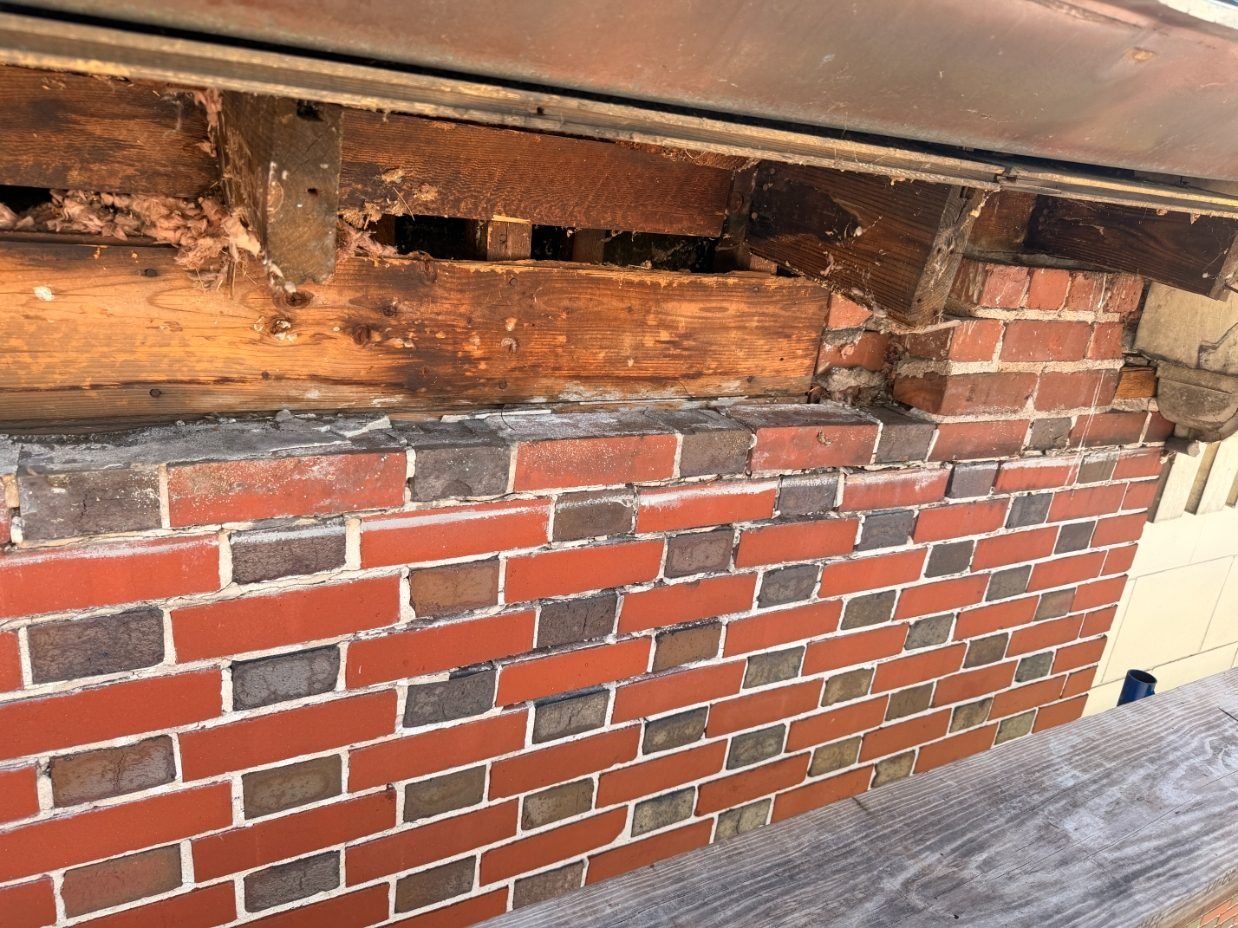
Brick Repair & Replacement in Worcester & Middlesex County, MA.
Cracked, chipped, loose, or deteriorating brick is more than an eyesore. Damaged brick lets water in, weakens the joints around it, and leads to bigger problems.
Not every damaged brick needs replacing. Often individual bricks can be repaired, or carefully replaced while preserving the masonry around them. Either way, the repair should blend naturally into the wall it sits in.
Common signs your brick needs repair
- Cracked or broken bricks
- Loose or shifting bricks
- Spalling or flaking surfaces
- Water damage near walls or chimneys
- Deteriorating mortar around damaged bricks
- Gaps between bricks and joints
- Bulging or uneven brickwork
Catching these early keeps a small repair from turning into a large one.
What causes brick damage?
Moisture, weather, aging mortar, settlement, and improper past repairs. Water is the main culprit almost every time, and freeze-thaw compounds it through the winter. More on that in water and moisture problems.
Our brick repair process
Every job starts with an inspection of the brick, the mortar, and the surrounding masonry, so we can tell whether you're looking at a repair, individual replacement, or a larger restoration. From there the work may include:
- Removing damaged bricks
- Installing matching replacements
- Repairing mortar
- Repointing the surrounding joints
- Blending the repair with the existing brickwork
- Addressing the underlying water source
Brick spalling
Brick behaves a bit like a sponge. It absorbs water, temperatures drop, the trapped water expands, and that pressure damages the face of the brick until pieces fall away. The result looks rough, cracked, flaky, or peeling. See brick problems for more.
- The face of the brick breaking apart
- Flaking or crumbling surfaces
- Small pieces falling off
- Cracks running through individual bricks
- A swollen or uneven look to the wall
- Powdery debris near the foundation or walkway
What causes it:
- Moisture intrusion through damaged joints, cracks, or poor flashing
- Freeze-thaw cycles, which are hard on masonry in Massachusetts
- Incorrect repairs — mortar that's too hard for the brick, or film-forming sealers that trap moisture inside instead of letting the wall dry
- Brick that was incompatible or too soft for that exposure to begin with
Can spalled bricks be repaired?
Sometimes. Small areas are usually handled with individual replacement using matched brick. Widespread spalling calls for a larger restoration approach. A proper repair means identifying the moisture source, removing the damaged brick, matching the replacements, repairing the surrounding joints, and correcting flashing and drainage paths. If the real fix is gutters or grading rather than masonry, we'll say so plainly.
Matching existing brick and mortar
A repair should look intentional, not obvious. We match size, color, texture, and pattern in the brick, then match mortar color and joint profile so the patch reads as part of the wall.
Older and historic homes
Aging brick and older mortar systems need a careful hand and restoration techniques suited to them — not modern shortcuts. See historic homes.
We work across Worcester and Middlesex County on repairs built to hold up in New England weather. Tell us what you're seeing and we'll schedule a consultation.
What this covers
- Individual brick replacement
- Cracked and broken brick repair
- Spalling brick repair
- Loose and shifting brickwork
- Joint repair around replaced brick
- Brick and mortar matching
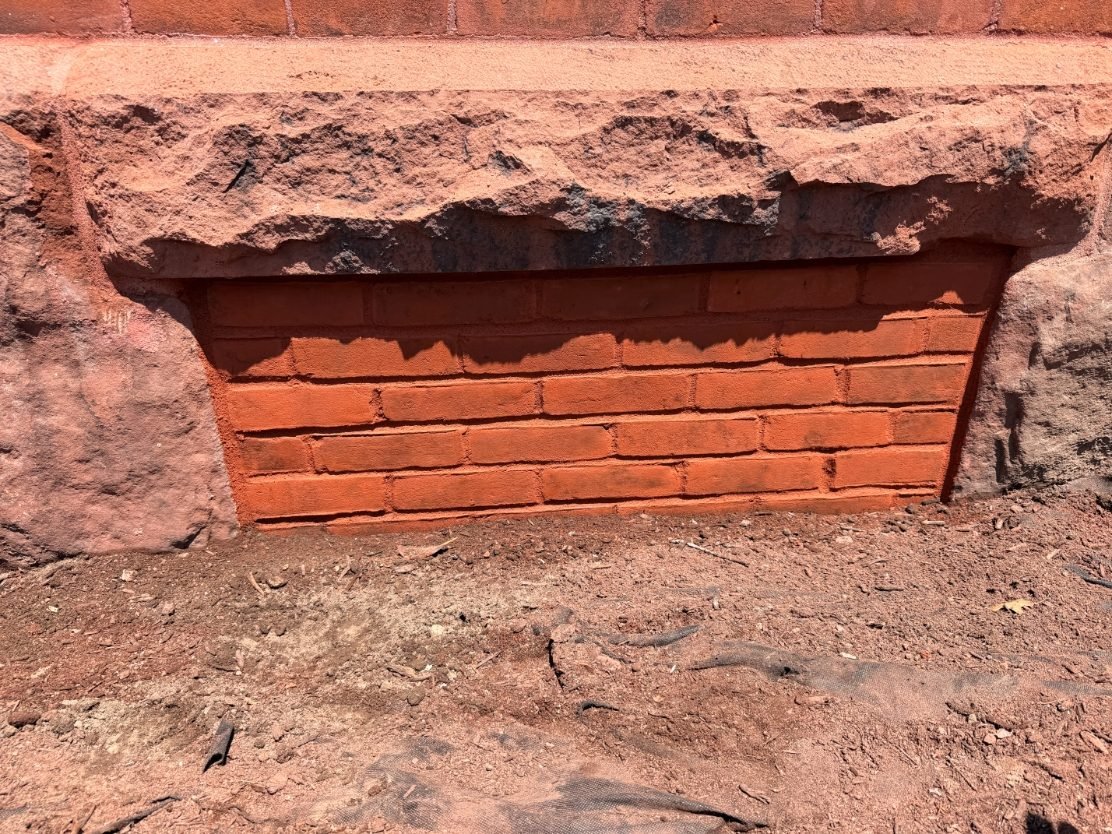
Point at the problem.
Point at what's wrong in plain words — flaking, loose, cracked — that's enough to start.
Seeing something else? Send a photo — a look costs nothing.
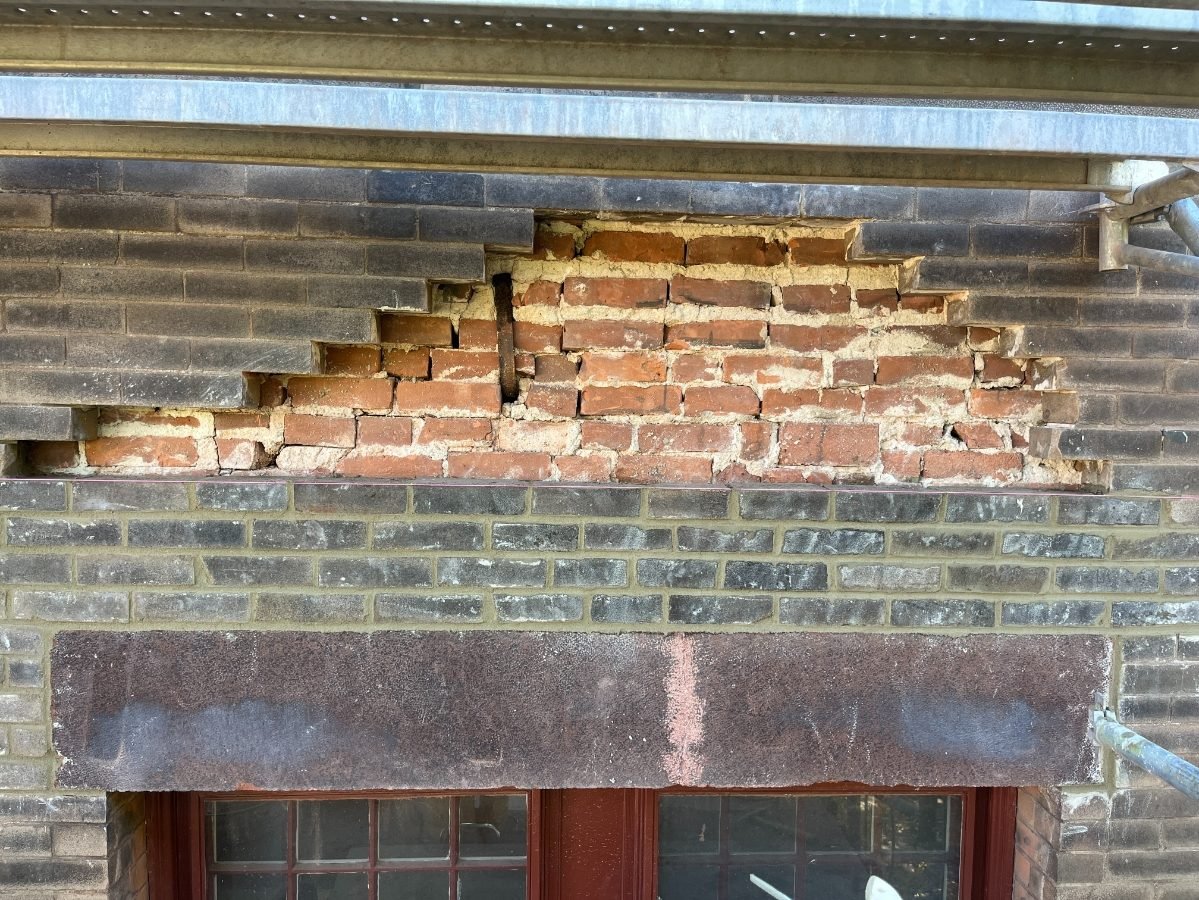
Tell us what's broken.
Send two photos. Get a straight number. Most estimates within 48 hours, across Central Massachusetts and the towns we cover.