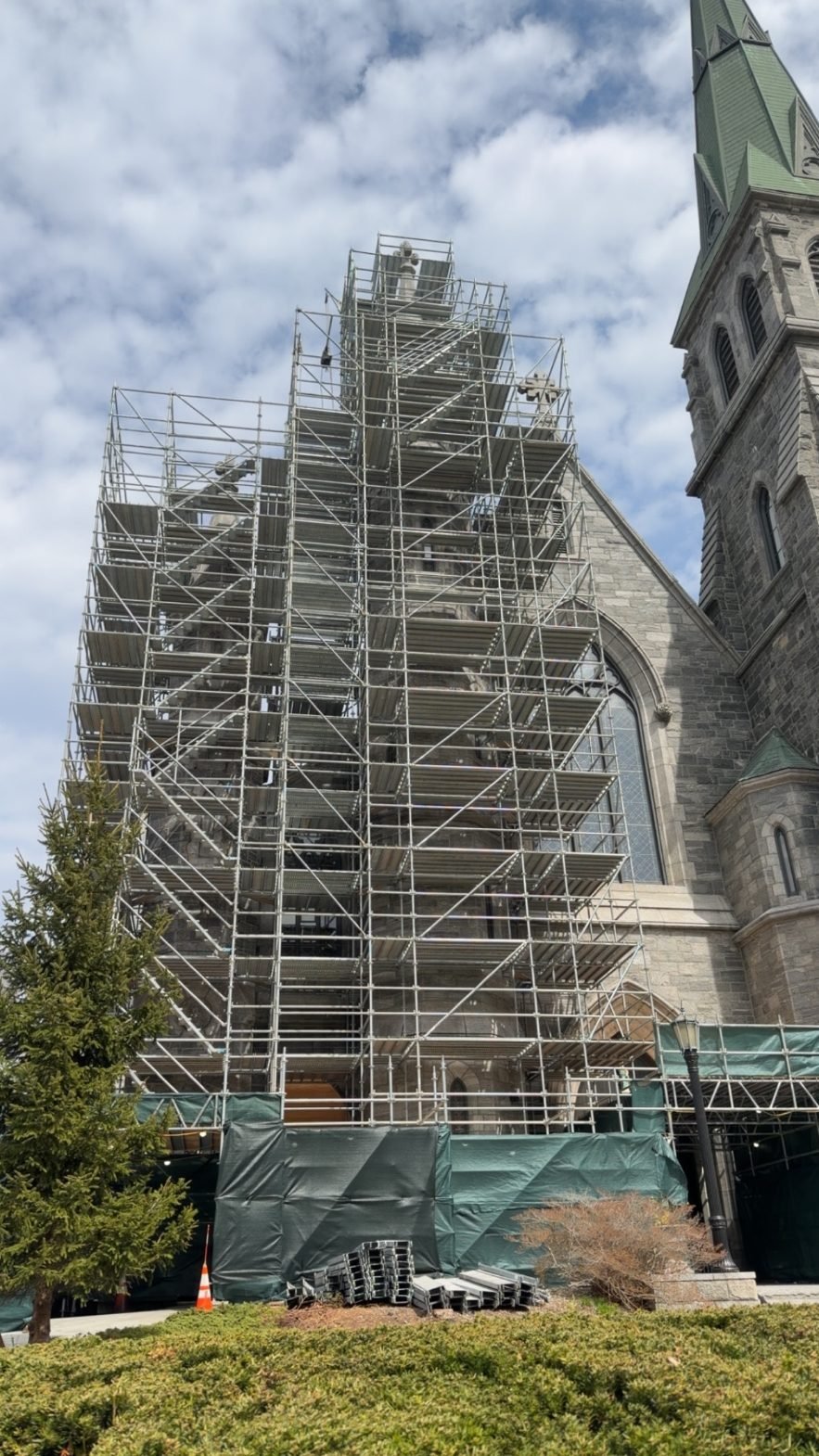
Does an 1800s house need special mortar?
Yes. A house from that era was built with lime-based mortar, and it needs lime-based mortar back. That is not nostalgia, it is how the wall works.
Lime mortar is soft, flexible, and forgiving. It lets the wall move slightly with temperature and settlement without cracking the brick, and it lets moisture pass out through the joints instead of through the units. It even reseals hairline cracks over time as free lime recrystallizes.
Matching an old house means matching softness, absorbency, sand color, sand size, and joint profile — not just picking a bag off a shelf that looks close.
Can you use Portland cement on old brick?
No, and this is the single most damaging thing done to old masonry.
Portland-based mortar is hard, dense, and nearly waterproof. Put it against soft historic brick and you have inverted the way the wall was designed. Mortar is supposed to be the sacrificial part — the piece that erodes, cracks, and gets replaced every few generations. When the mortar is harder than the brick, the brick becomes the sacrificial part instead.
What happens next is predictable. Moisture that used to leave through the joints is forced out through the brick faces. It freezes there. Faces pop off. Edges crumble. And you cannot replace a face on an original brick — that damage is permanent.
The cruel part is the timeline. A hard-mortar repoint looks tidy and correct for the first couple of years. The bill comes due later.
Why are old bricks softer than modern ones?
They were fired in simpler kilns at lower and less even temperatures, often from local clay. That produced brick with more porosity and less compressive strength than a modern extruded unit.
Softer is not the same as worse. Those bricks have stood for well over a century because the whole system — soft brick, soft mortar, breathable wall — was in balance. Problems start when a modern material is dropped into that system.
How do you repair historic brick without damaging it?
Slowly, and mostly by hand. Old joints get cut out with hand tools and careful, controlled grinding where it is safe — never an aggressive saw run down a wall, which chews arrises and widens joints permanently.
The joint is cut to a proper depth, cleaned, dampened, and packed in layers with a matched mix, then tooled to the original profile once it has set enough to take the finish. Work is protected from sun, wind, and frost so it cures rather than dries out.
The goal on an old house is that nobody can see where the work was done.
- Hand tools first, mechanical cutting only where it will not damage the brick
- Depth cut to roughly twice the joint width, packed in layers
- Mortar matched for softness, color, sand, and profile
- Work protected and kept damp so it cures properly
Should original brick be replaced or repaired?
Repaired, wherever the unit is still doing its job. Original brick is the character of the house and it cannot be bought back.
Replacement is for units that are structurally gone — crumbled through, broken in place, or spalled so deep they no longer carry or shed water. Even then it is done one unit at a time with salvage or a close match, not by taking out a whole panel because it is faster.
If a section of wall has moved, bulged, or lost bearing, that is a rebuild conversation rather than a repair one. The guide on repointing versus rebuilding walks through how to tell.
What mortar matches a historic home?
A lime-rich mix chosen to sit softer than the brick it surrounds, with sand selected to match the color and grain of the original. On most 19th-century New England houses that means a lime mortar, sometimes with a small proportion of natural cement, never a hard modern Type S.
Match is judged against clean original mortar in a sheltered spot, not against the weathered face. Test areas are worth the time — mortar changes color as it cures, so the first patch tells you what the wall will actually look like.
How do I preserve original masonry?
Keep water off it and out of it, and stop anything harder than the brick from touching it. That covers most of what preservation actually means day to day.
Keep gutters clear and discharging away from the wall. Keep soil, mulch, and shrubs off the brick. Repoint failed joints before whole units start going. Do not seal, do not paint, and do not let anyone parge over a problem instead of fixing it.
Can old brick be cleaned safely?
Yes — gently. Water, a soft brush, time, and the mildest cleaner that will do the job. Low pressure only, and always tested on a small area first.
What never belongs on historic brick is sandblasting. It strips the hard fired skin off every unit it touches and leaves an open, absorbent surface that soaks up water for the rest of the building's life. High-pressure washing and aggressive acids do a slower version of the same thing.
A slightly weathered old wall is fine. A blasted one is a maintenance problem forever.
Why is my century-old chimney deteriorating faster than the rest of the house?
Because it is the most exposed masonry on the building. A chimney takes weather from every side and from above, it has no roof over it beyond its own crown, and it goes through more freeze-thaw cycles than any wall because it heats and cools with use.
Add a cracked crown, a missing cap, or flashing that has given up, and water pours into the stack from the top down. That is why chimneys are usually the first masonry on an old house to need real work.
Where to go from here
Historic work lives under repair and restoration. To work out which job your wall needs, read repointing vs. rebuilding. Curious what moves the price? See the cost guide.
Trade-schooled and in the field every day across Spencer, Charlton, Worcester and the surrounding towns. Call or text (774) 420-9642, or send a couple of photos — a look costs nothing.
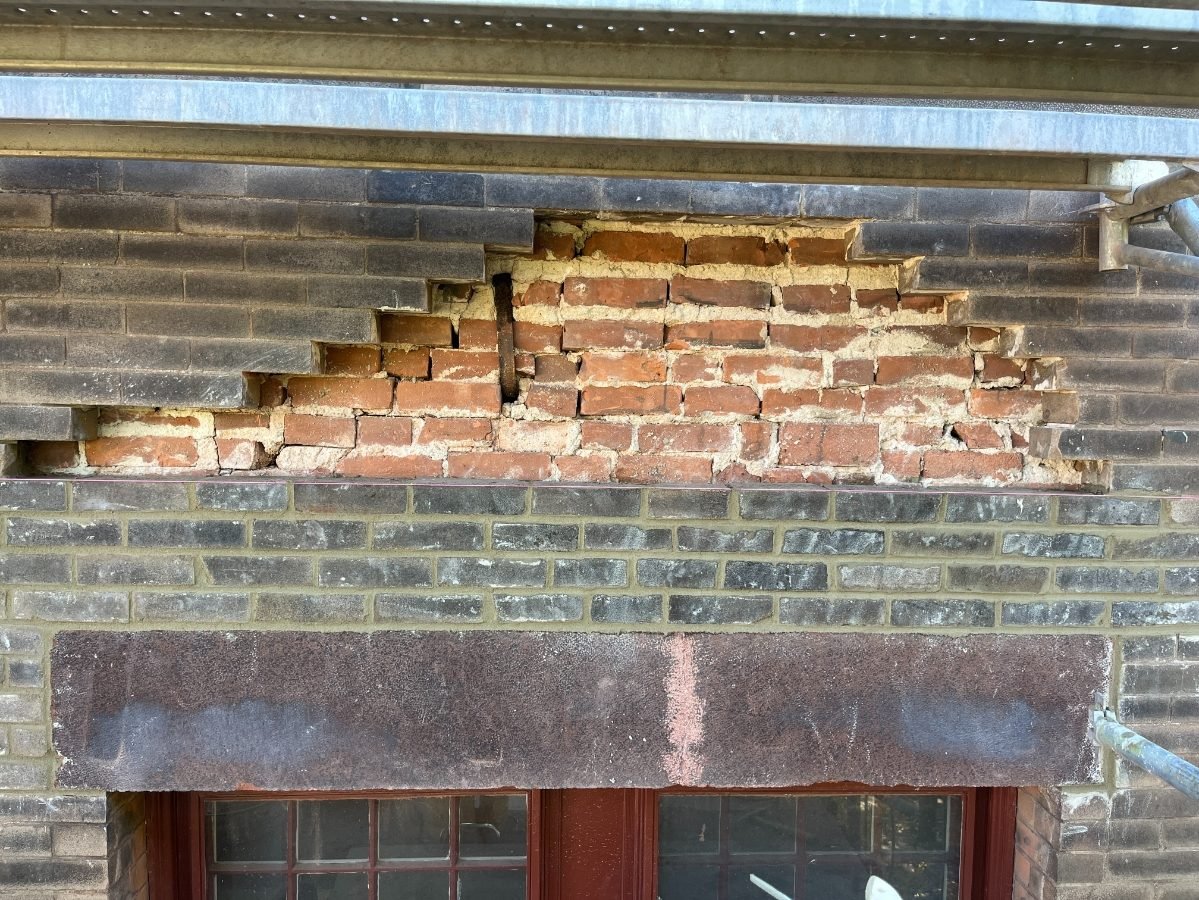
Tell us what's broken.
Send two photos. Get a straight number. Most estimates within 48 hours, across Central Massachusetts and the towns we cover.