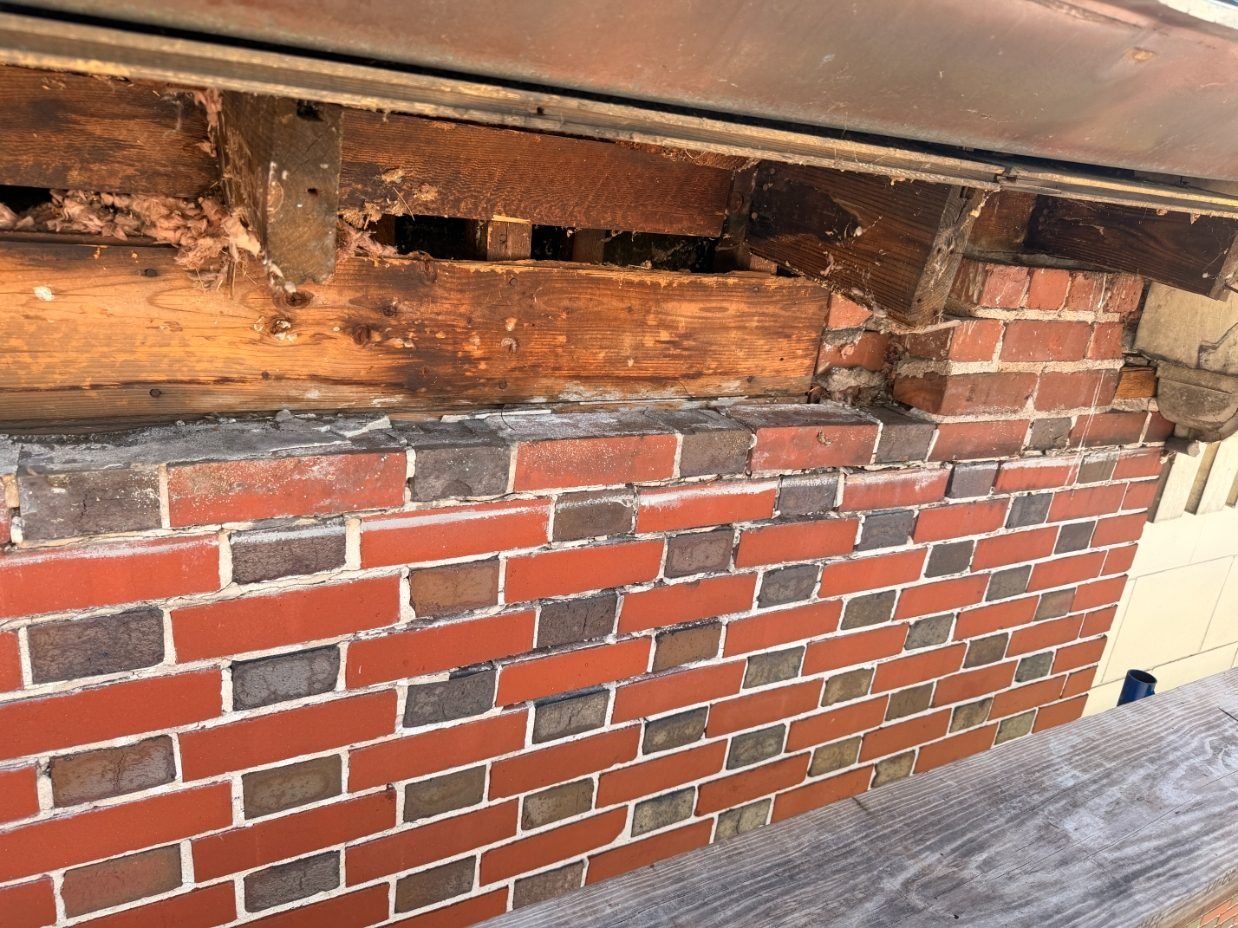
Why winter takes masonry apart.
Water gets in, freezes, and expands. Do that a few dozen times a season and brick starts letting go.
Masonry in New England doesn't wear out slowly and evenly. It gets taken apart in a very specific way, every winter, by water that shouldn't be in it. Understanding that one mechanism explains almost every masonry problem people call about.
The mechanism
Brick and mortar are porous. They take on water — from rain, from snow sitting against a wall, from a gutter overflowing, from ground splash. When that water freezes it expands roughly nine percent. Inside a joint or inside the brick body, that expansion has nowhere to go, so it pushes.
One freeze does nothing you'd notice. Central Massachusetts gives masonry dozens of freeze-thaw cycles in a single season, and the damage is cumulative. Each cycle opens the pore a little more, which lets in a little more water, which freezes a little harder. That's why masonry problems seem to appear suddenly — the failure is visible long after it started.
Where it hits first
Anywhere water collects or sits. Chimney tops take direct weather on all sides with no roof over them, so crowns crack and the top courses go first. Parapets and wall caps are the same story. Down low, steps and the bottom few courses of a wall catch splash and snow piles and stay wet for weeks.
South and west faces cycle the most, because sun thaws them during the day and they refreeze overnight. That's often why one elevation of a house looks decades older than the others.
What to look for in spring
- Mortar joints recessed, sandy, or dropping crumbs at the base of the wall
- Brick faces flaking, blistering, or popping off in thin layers
- White chalky staining on the brick, meaning water is moving through it
- New cracks in a chimney crown or a wall cap
- Steps that shifted or a walkway that lifted over the winter
- Damp patches or stains on interior walls and ceilings near a chimney
What makes it worse
The big one is sealing the wall with the wrong product. Film-forming sealers trap moisture inside the masonry, and trapped water freezes just as well as water on the surface. Hard modern mortar on soft old brick does the same kind of harm by forcing the brick to absorb the stress. So does a de-icing salt habit on brick or stone steps.
Everyday drainage matters more than any product. A gutter dumping against a wall, grade sloping back toward the house, or a downspout ending at the foundation will out-damage the weather by itself.
What actually helps
Keep water off and let the wall dry. That means gutters that work, downspouts that discharge away from masonry, grade that falls away from the house, crowns and caps that are intact, and flashing that's sealed. Then close the joints — repointing with a mix matched to the brick is the real protection, not a coating.
Timing matters too. Fresh mortar needs to cure before hard cold, so late fall work may need protection or may be better held to spring. Anything unsafe gets stabilized whenever it happens.
Get ahead of it
The cheapest version of every masonry repair is the one done while the brick is still good. Once faces start spalling, you're into replacement instead of repointing — see repointing vs. rebuilding for where that line sits, and what drives the cost.
If your chimney is showing any of the above, start with chimney work. For walls and facades, repair and restoration. Or just send a couple of photos and we'll tell you what you're looking at.
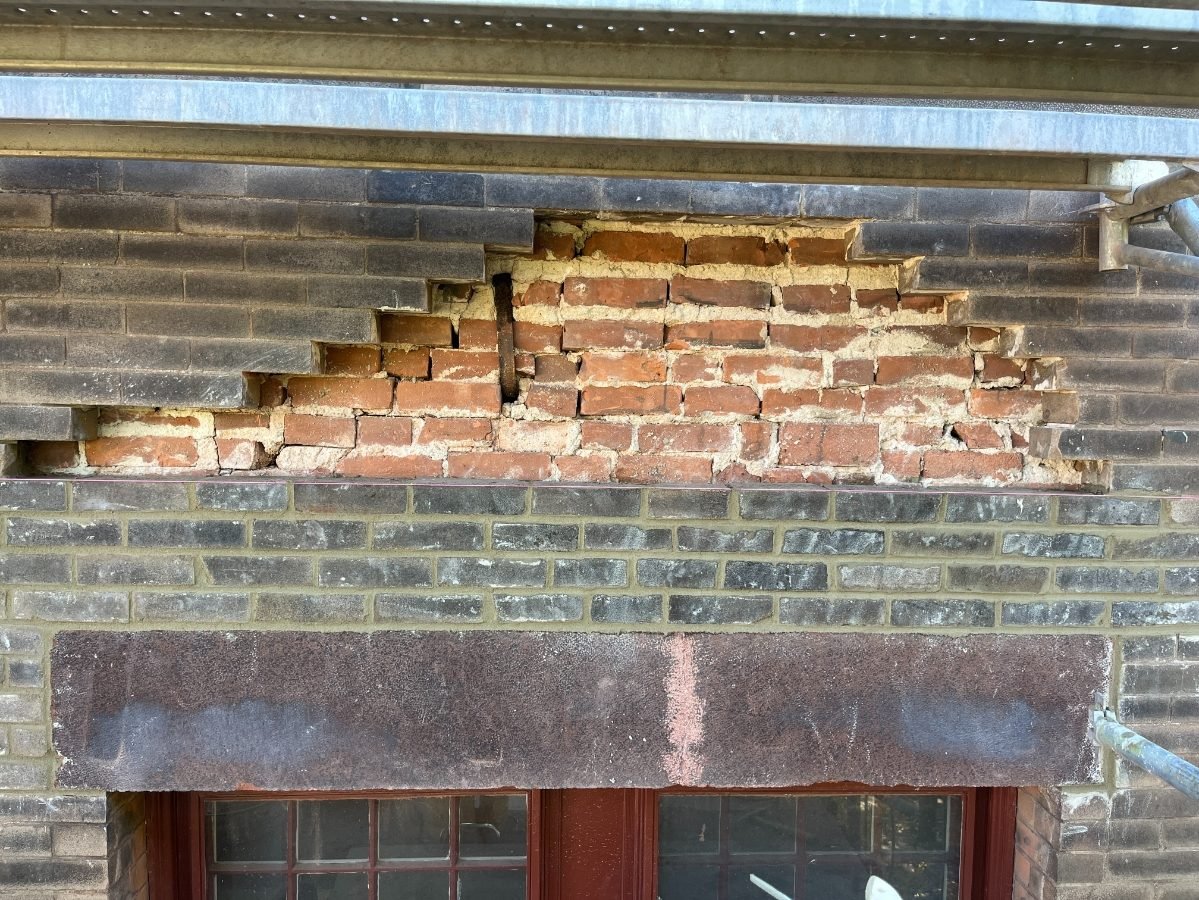
Tell us what's broken.
Send two photos. Get a straight number. Most estimates within 48 hours, across Central Massachusetts and the towns we cover.