Is brick supposed to absorb water?
Yes. Brick and mortar are porous by design. A masonry wall takes on water when it rains and gives it back up as it dries. That cycle is normal and it is how the wall has survived every winter it has seen so far.
The problem is never that the wall got wet. The problem is when water gets in faster than it can get back out, or when it finds a path straight through instead of soaking into the face.
Why is my brick wall wet after rain?
A damp face that dries out over a day is the wall doing its job. A face that stays dark for a week, or a patch that is wetter than everything around it, is telling you where the water is getting in.
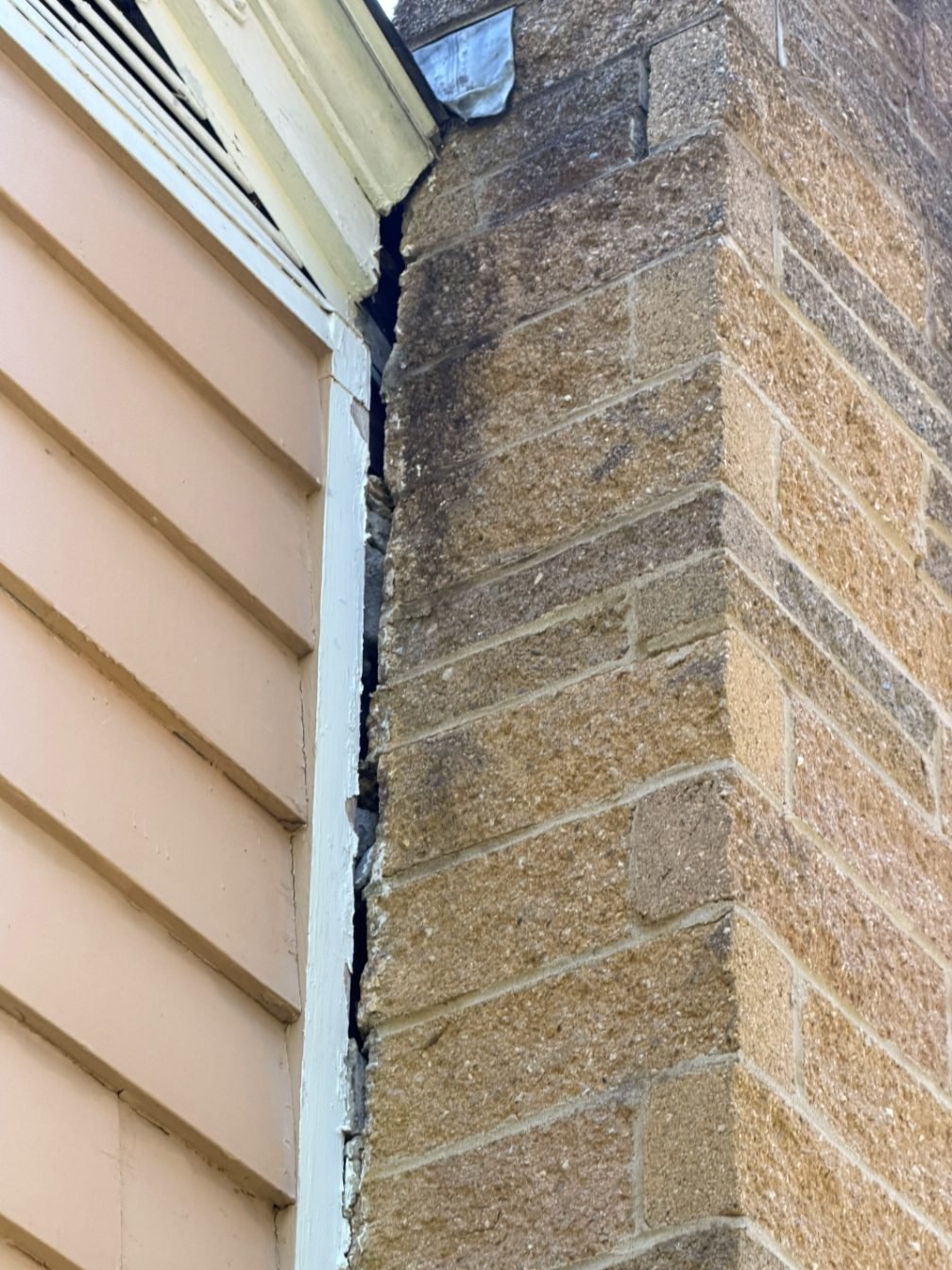
The usual culprits are open or eroded mortar joints, a cracked or missing chimney crown, failed flashing where the masonry meets a roof or wall, a cap or coping that has lost its joints, and gutters or downspouts dumping water down the brick instead of away from it.
- Open, sandy, or recessed mortar joints
- Cracked crowns, caps, or coping stones
- Failed or missing flashing at rooflines and step joints
- Overflowing gutters and downspouts discharging against the wall
- Grade or hardscape sloping back toward the house
Why is water coming through my basement brick?
Below grade, brick is sitting in wet soil most of the year, and it will wick moisture upward and inward. If joints down there have gone soft, water has an easier road.
Before anyone starts opening walls, the honest first step is to rule out the cheap causes above ground: gutters, downspout extensions, and the way the ground slopes for the first several feet around the house. A surprising share of wet basements are a roof drainage problem wearing a masonry costume.
We should be straight with you about scope. We are a masonry outfit — brick, stone, block, and pavers. We do not pour concrete, waterproof foundations, or install drainage systems. What we will do is repoint and rebuild the masonry that is letting water through, and tell you plainly when the real fix is gutters, grading, or a drainage contractor.
What is the white powder on my brick?
That is efflorescence: mineral salts carried out of the brick and mortar by water and left on the surface as the water evaporates. The powder itself is harmless and often brushes off dry.
What matters is what it proves. Salts do not move without water moving them. Efflorescence is a receipt for moisture traveling through the wall, so a fresh bloom every spring means water is still getting in somewhere.
Cleaning it off without finding the source just gives you a clean wall that blooms again next season.
Why is my brick turning green?
Green means the surface stays damp long enough to grow algae or moss. It shows up on north faces, behind shrubs, under leaking gutters, and low on walls that get splashed.
It is a symptom of drying time, not a disease of the brick. Improve airflow and sunlight, fix whatever is keeping that face wet, and clean it down with gentle methods. Pressure washing at high pressure strips the fired face off brick and opens joints — that trades a stain for real damage.
Why is my brick flaking apart, and why are some bricks soft?
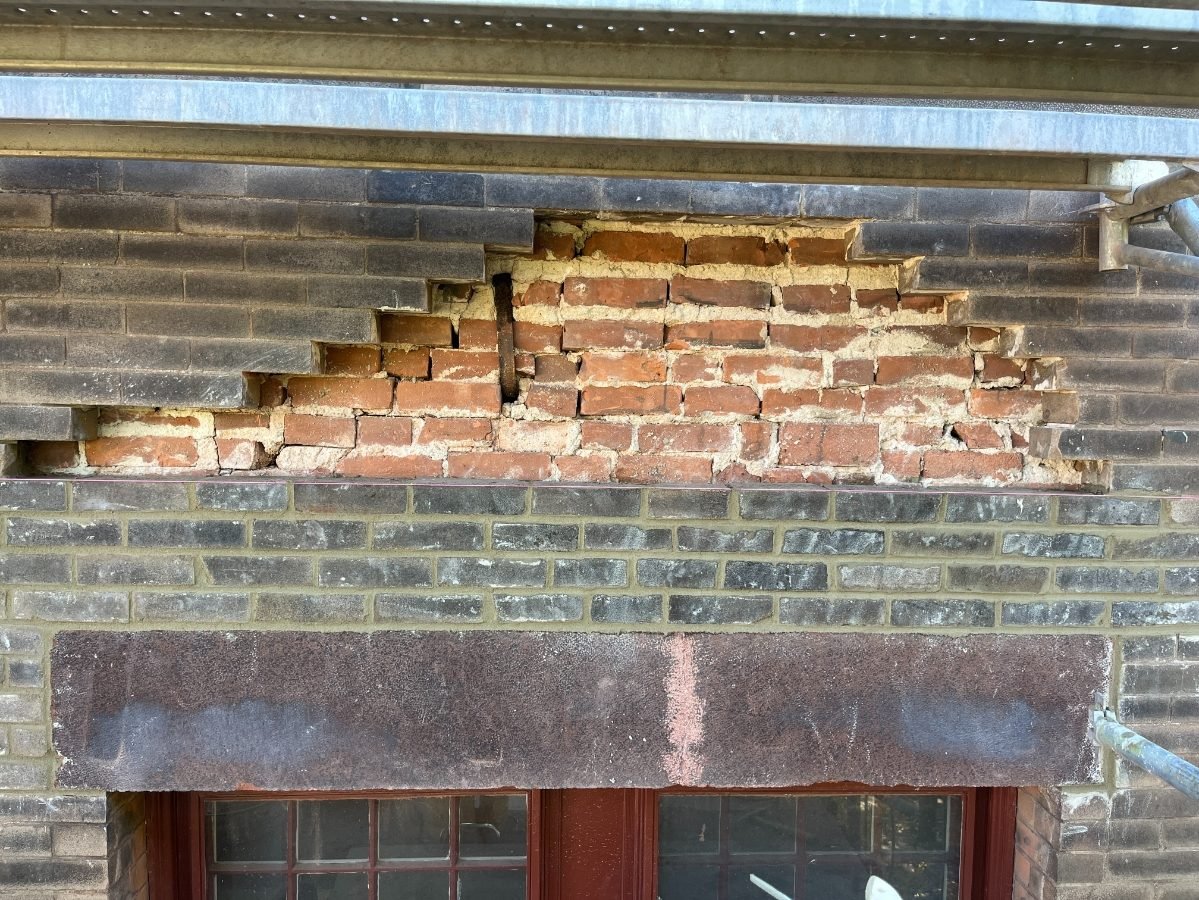
Water soaks into the brick, freezes, and expands. Ice takes up more room than water did, so it pushes the face outward until a layer pops off. That is spalling, and once the hard fired face is gone the brick underneath is soft and absorbs even faster.
Soft brick has two common explanations. Some brick was soft to begin with — older units, especially anything fired before modern kilns, were never as dense as today's brick. And some brick has been softened by years of saturation and freeze-thaw cycling.
Soft brick is not automatically a rebuild. It does mean the mortar around it has to be softer still, so the joints keep taking the punishment instead of the units.
Does sealing brick solve moisture problems?
Usually not, and often it makes things worse. This is the single most common bad advice we clean up after.
A film-forming sealer coats the outside of the wall. It slows water going in, but it also slows water coming out — and water gets into a wall from plenty of places a face coating never touches: the top, the back, the joints, the flashing, the ground. Once that moisture is inside with nowhere to escape, it sits behind the coating and freezes there. The result is spalling faces and blown joints on a wall that looked freshly protected.
The real fix is unglamorous: sound mortar joints, an intact crown or cap, working flashing, gutters that carry water away, and ground that slopes away from the house. Let the wall breathe and it will keep doing what it has done for a hundred years.
Should old brick be waterproofed?
Old, soft, historic brick is the last wall you want to trap moisture inside. Vapor-impermeable coatings on soft brick tend to accelerate exactly the damage they were sold to prevent.
Where a breathable water-repellent treatment genuinely helps, it is a small part of a job that starts with repointing in a matched, softer mix. Coating first and repointing later is backwards.
How do I stop moisture damage for good?
Work top down and outside in. Fix the crown, cap, or coping. Fix the flashing. Repoint the failed joints with a mix matched to the brick. Get roof water into gutters and away from the wall. Keep the ground sloping away and keep soil and mulch off the brick.
Then leave the wall alone and let it dry. A masonry wall that can dry out is a masonry wall that survives New England winters.
Where to go from here
Most of this work lands under repair and restoration. If the damage is showing up over winter, read winter, freeze-thaw and your masonry. Wondering what drives the price of a repair? That's covered in the cost guide.
Trade-schooled and in the field every day across Spencer, Charlton, Worcester and the surrounding towns. Call or text (774) 420-9642, or send a couple of photos — a look costs nothing.
Tell us what's broken.
Send two photos. Get a straight number. Most estimates within 48 hours, across Central Massachusetts and the towns we cover.