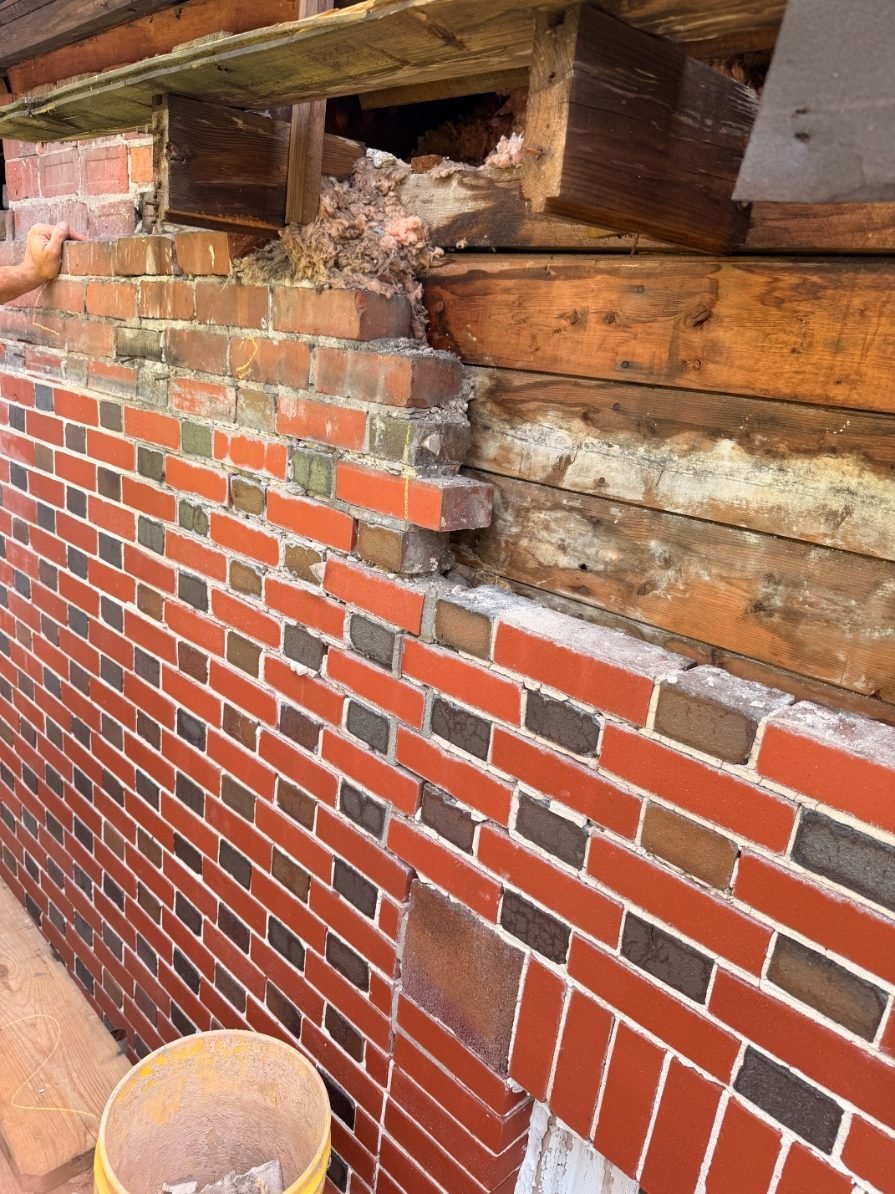
Why is my stone wall leaning?
Water and soil pressure behind it, nearly every time. Soil holds water, saturated soil is heavy, and in winter it freezes and expands. A wall built without a way to relieve that pressure gets pushed forward a fraction of an inch at a time until the lean is obvious from the street.
The other contributors are a base that was never deep or wide enough, no batter — the slight backward lean a good wall is built with — and stones set without enough overlap or bond so the wall behaves as a stack rather than a single mass.
A wall leaning outward is not settling into place. It is failing slowly, and it is easier and cheaper to deal with before it comes down.
Can a stone retaining wall be repaired?
Often, yes — and often only in part. If the base is sound and one section has moved, that section gets taken down carefully, the material set aside, the base and backfill corrected, and the stone laid back up.
Where the whole wall has rotated forward, or where the base has failed along its length, a rebuild is the honest answer. Resetting the top courses on a bad base just resets the clock.
Original stone almost always goes back in. That is the character of the wall and it usually costs less than importing new material.
Why are my patio pavers sinking?
A paver patio is only as good as what is under it. Sinking means the base has moved, and the base moved because of one of a short list of things.
Not enough compacted base under the pavers. Base material that holds water instead of draining. Bedding sand washed out from underneath by water running through or beneath the patio. Frost heave lifting and dropping sections over a winter. Or edge restraint that has let go, so the whole field slowly spreads and drops at the perimeter.
The good news is that pavers are removable. A sunken area can be lifted, the base rebuilt and recompacted properly, and the same pavers reset — you rarely need new material.
- Thin or poorly compacted base
- Base material that traps water rather than draining
- Bedding sand washed out by running water
- Frost heave over New England winters
- Failed or missing edge restraint
Why is my stone walkway uneven?
Same causes as a sinking patio, plus two more. Tree roots lift flags and pavers from below and will keep doing it, so the fix has to deal with the root, not just the stone. And walkways are narrow, which means they get less compaction during installation and more concentrated foot traffic per square foot than a patio does.
An uneven walk is a trip hazard more than a cosmetic problem, especially where it meets steps. Individual flags can usually be lifted, the base corrected, and the stone reset level with the run.
Can old stone steps be repaired?
Usually. Old granite and fieldstone steps are worth saving — the material is better than most of what you can buy today, and it is already the right colour for the house.
The common failures are treads that have shifted or rocked because the bedding under them washed out, joints that have opened and let more water in, a cheek wall that has bulged, and spalling on the front edge from de-icing salt.
Repair means lifting the affected treads, rebuilding the bearing and base beneath, resetting them level and stable, and repointing the joints in a mix suited to the stone. Steps that rock are a safety issue, so they get treated as urgent rather than cosmetic.
Why is my retaining wall cracking?
Cracking is the wall telling you where it is being pushed or where it has lost support. Vertical cracks usually mean pressure from behind. Stair-step cracking through the joints often means differential settlement — one part of the base has dropped relative to another. Horizontal cracking partway up a wall is the most serious pattern, because it usually means the wall is bending under load.
In every case the crack is the symptom. Repointing it without correcting the water or the base behind it means the same crack returns, in the same place, usually within a couple of seasons.
Does my retaining wall need drainage?
Yes. Retaining walls do not fail because the stone was weak — they fail because water got trapped behind them and had nowhere to go. Relieving that pressure is the single most important thing about a wall that lasts.
In practice that means free-draining backfill directly behind the wall rather than the clay soil that was dug out, a filter layer so fines do not clog it, weeps or a perforated pipe at the base to give water an exit, and grading above the wall that sends surface water somewhere useful.
Here is the honest boundary of what we do. We correct drainage as part of a masonry rebuild — backfill, weeps, base drainage behind a wall we are building or rebuilding. We do not install standalone drainage systems, pour concrete, or waterproof foundations. If your problem turns out to be a yard drainage or grading job rather than a masonry one, we will tell you that plainly instead of selling you a wall.
Where to go from here
This work sits under patios and outdoor masonry — see patios and walkways for the detail. New stone walls and veneer live under brick and stone construction, and the cost guide covers what drives the size of a repair.
Trade-schooled and in the field every day across Spencer, Charlton, Worcester and the surrounding towns. Call or text (774) 420-9642, or send a couple of photos — a look costs nothing.
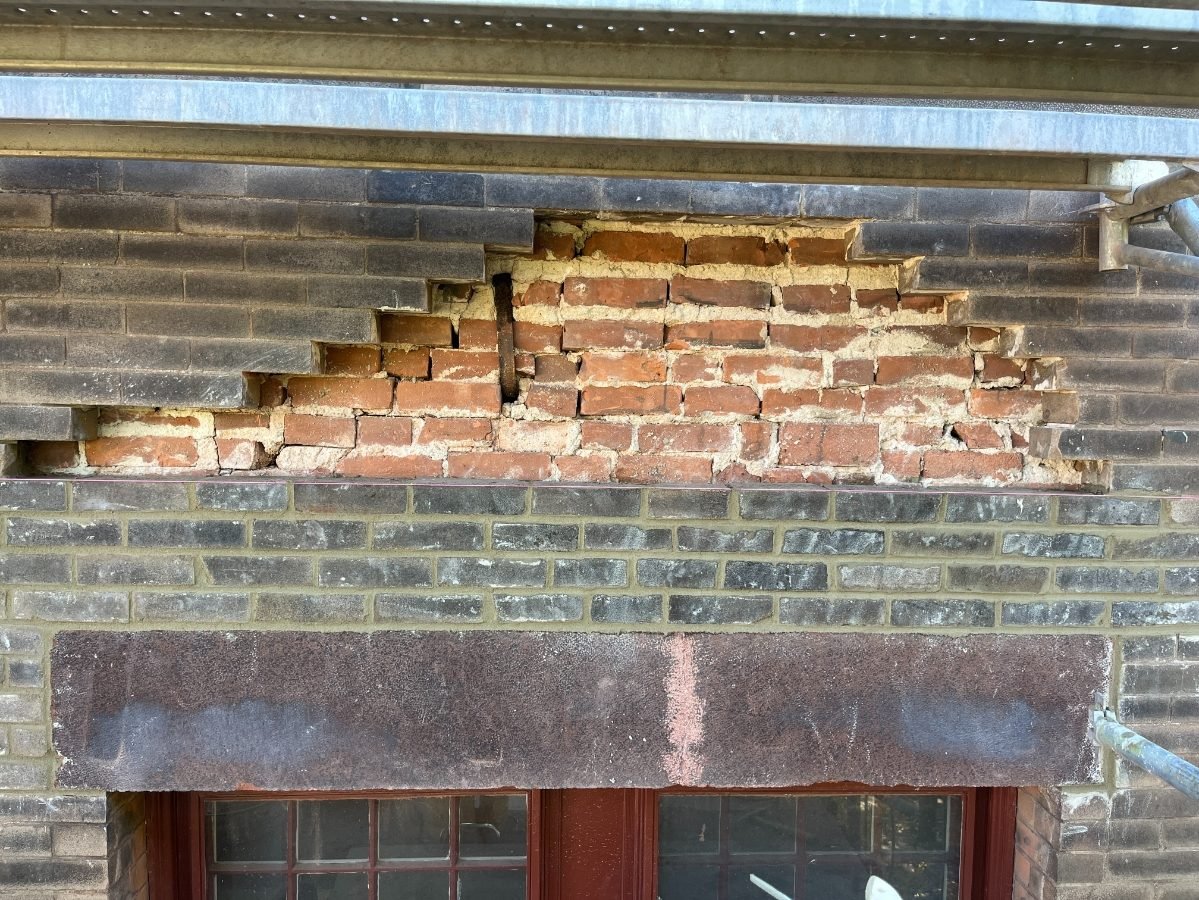
Tell us what's broken.
Send two photos. Get a straight number. Most estimates within 48 hours, across Central Massachusetts and the towns we cover.