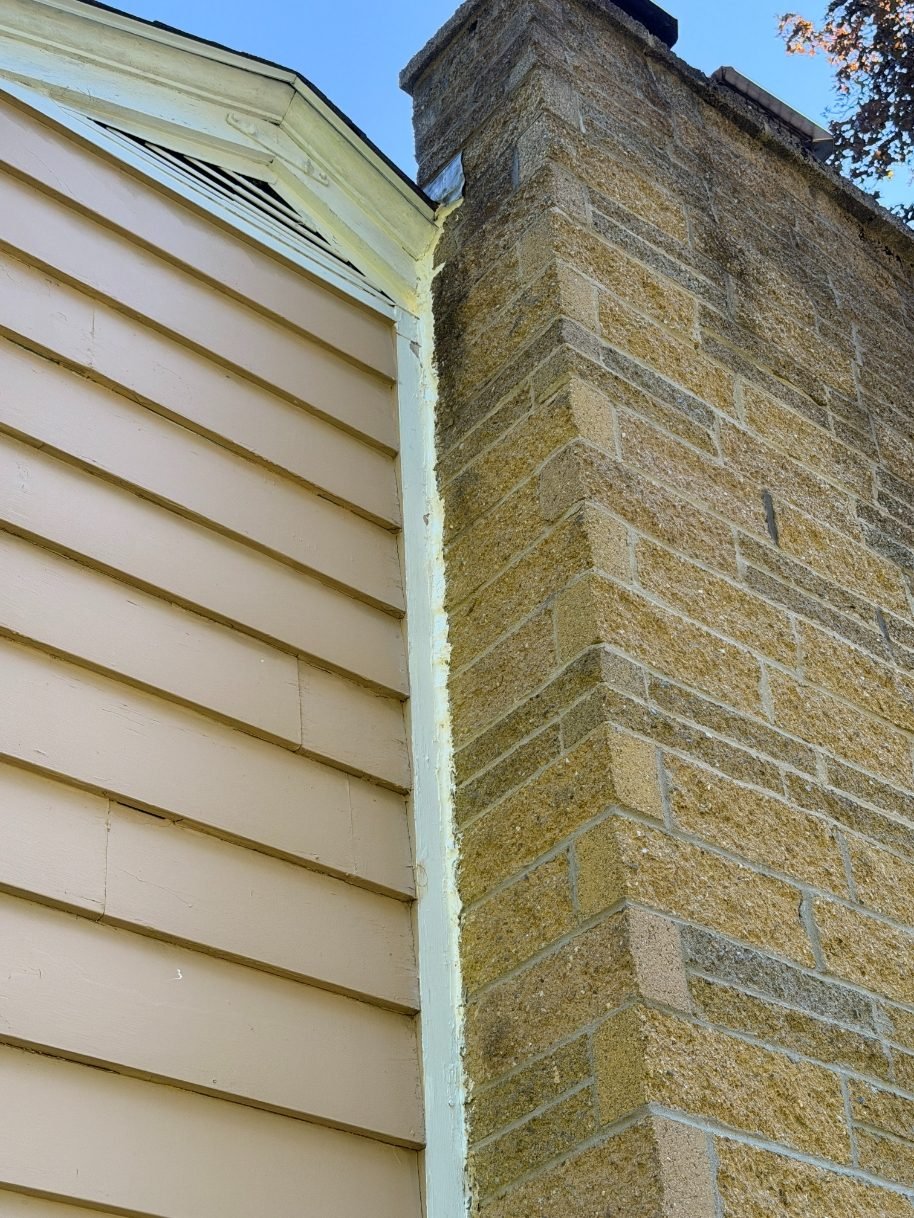
Why is my chimney leaning?
A leaning stack is a bearing problem, a moisture problem, or both. The three we see most often are joints that have washed out on one side so the stack settles unevenly, a footing or hearth below that has shifted, and years of one-sided weather eating the windward face faster than the sheltered one.
There is also a chemical version. Flue gases can attack mortar from the inside on an unlined chimney, which hollows out the joints from within while the outside still looks respectable.
A lean is not something to watch for another season. Sight up the corners from the ground, and if it is out of plumb, get it looked at before winter.
Why are bricks falling off my chimney?
Because the chimney is the wettest, coldest, most exposed masonry on the house. It catches weather from four sides, has nothing above it but its own crown, and cycles through freezing and thawing more times per winter than any wall on the building.
When the crown cracks or the cap is missing, water runs straight down inside the stack. The joints go, the faces spall, and units let go one at a time. Anything landing on the roof or in the yard is telling you the top of the stack has already failed.
Does my chimney need rebuilding?
Sometimes the honest answer is yes, and sometimes it is only the top few feet.
Repointing is the answer when the brick is still sound, the stack is plumb, and the joints have simply eroded. A rebuild is the answer when the units themselves are crumbling, when the stack is out of plumb, when courses have lost bearing, or when it has been patched so many times that there is nothing solid left to point into.
It is very common for a chimney to need the section above the roofline rebuilt while everything below just needs repointing and a new crown. Scoping that line honestly is most of the job.
- Plumb stack, sound brick, eroded joints — repoint
- Crumbling units, lean, or lost bearing — rebuild the affected section
- Damage concentrated above the roofline — partial rebuild plus new crown
- Repairs stacked on repairs — rebuild is usually cheaper over time
Can a cracked chimney leak?
Yes. It does not take much of a crack. A hairline in the crown, an open joint under a cap, or a gap where flashing meets brick will move a surprising amount of water in a driving rain.
The tell is often nowhere near the chimney. Water enters at the top, travels down inside the stack or between the flue and the masonry, and appears as a stain on a ceiling, in an attic, or along the wall a floor below.
Why is water coming into my fireplace?
Work down from the top. The usual suspects are a cracked or undersized crown, a missing rain cap letting weather straight down the flue, open joints in the stack, failed flashing and counterflashing at the roofline, and a chimney with no proper drip edge so water runs back onto the brick.
Water in the firebox or a damp smell after rain is almost never the firebox's fault. It is the top of the chimney, and it will keep coming until the top is fixed.
How often should a chimney be looked at?
Every spring, after the winter has had its go at it. That is when freeze-thaw damage from the season just past is visible and when there is a full building season to fix it before the next one.
From the ground you can check for a lean, look for brick or crown fragments on the roof and in the gutters, and see whether the mortar joints up top look recessed. Anything more than that is a job for someone who is properly set up to be up there.
A quick spring look also catches flashing that has lifted over winter, which is one of the cheapest problems to fix and one of the most expensive to ignore.
Is chimney repointing worth it?
When the brick is still good, yes — comfortably. Repointing restores the weather seal and the strength of the stack while keeping the original masonry, and matched properly it lasts for decades.
It stops being worth it when you are pointing into brick that is already crumbling. Mortar has nothing to bond to, and you spend real money buying a couple of seasons. At that point the rebuild is the cheaper decision even though it is the bigger one.
For a longer walk through the difference, see the guide on repointing versus rebuilding.
How long does chimney repair take?
Small work is quick. A crown, a cap, a flashing repair, or a modest area of repointing is typically a day or two on site, weather permitting.
A partial rebuild above the roofline usually runs several days once staging is up. A full stack rebuild from the roof or from the ground is longer again, and it depends on access, height, and how much staging the house needs.
Two things stretch a schedule honestly: weather, because mortar needs reasonable temperatures to cure, and access, because getting safely to a chimney can take as long as the masonry itself. We give you a real window when we quote and tell you if we are booked out rather than promising a date we cannot hold.
Where to go from here
Crowns, caps, flashing, repointing, and rebuilds all sit under chimneys and fireplaces. For why winter is so hard on a stack, read winter, freeze-thaw and your masonry, and see repointing vs. rebuilding to work out which job you are looking at.
Trade-schooled and in the field every day across Spencer, Charlton, Worcester and the surrounding towns. Call or text (774) 420-9642, or send a couple of photos — a look costs nothing.
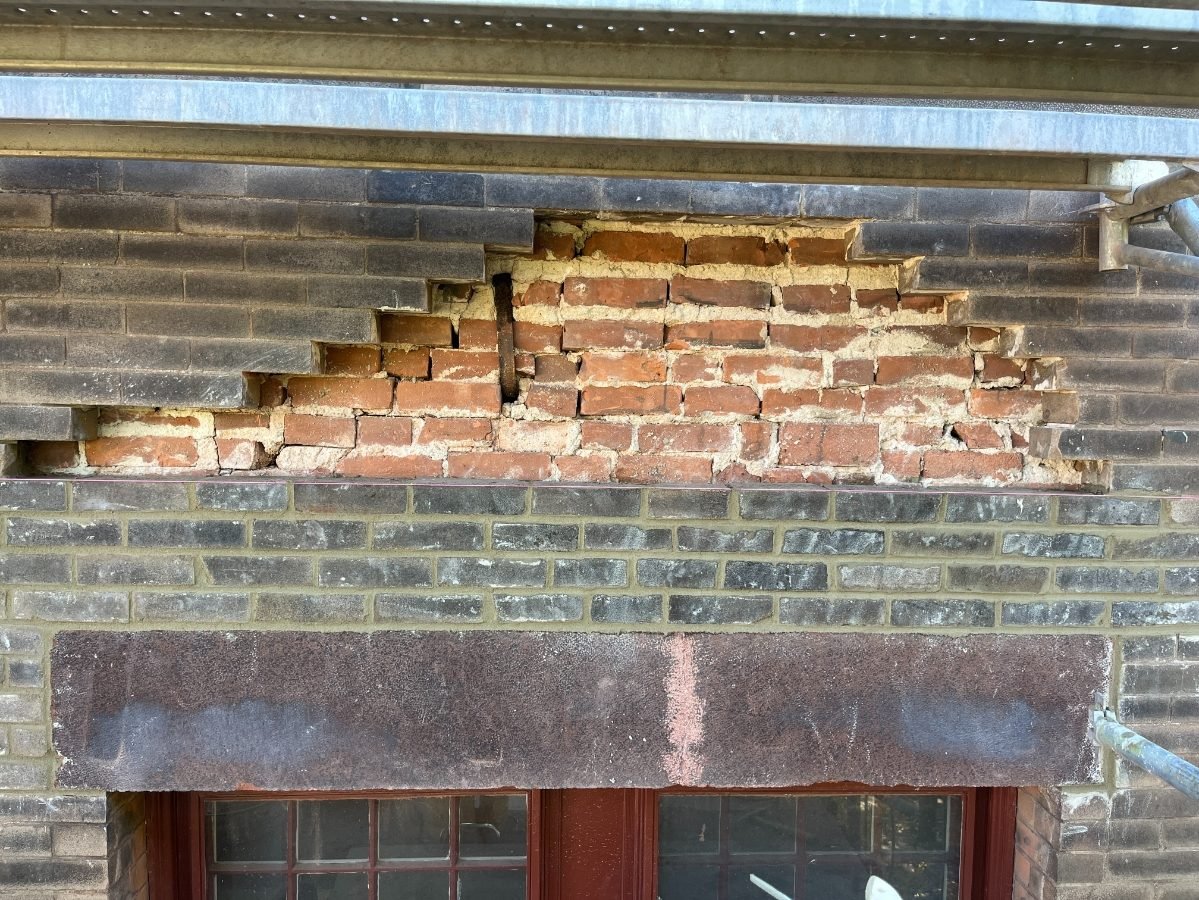
Tell us what's broken.
Send two photos. Get a straight number. Most estimates within 48 hours, across Central Massachusetts and the towns we cover.